Updated 2026-10-15 · By the WattSourcing sourcing team · Figures from EVE Energy published specifications
- Every lithium cell and battery is Class 9 dangerous goods. The UN number depends on chemistry and packing: UN3480/3481 for lithium-ion, UN3090/3091 for lithium metal.
- Watt-hour rating decides how strict the rules are. Lithium-ion cells above 20 Wh and batteries above 100 Wh are fully regulated; a 314Ah LFP cell (1,004.8 Wh) always is.
- No cell or battery may be shipped unless its type has passed the eight UN38.3 tests, and a UN38.3 test summary must be available to the supply chain.
- By air, lithium-ion batteries shipped on their own (UN3480) go on cargo aircraft only at no more than 30% state of charge. From 1 January 2026, the 30% limit also applies to batteries above 2.7 Wh packed with equipment (UN3481).
- Large cells, modules and home batteries normally move by sea under the IMDG Code. For small, urgent lots in Europe, EU warehouse stock avoids international DG shipping.
Lithium cells and batteries are among the most regulated goods in international freight. A shipment with the wrong UN number, a missing test summary or an incorrect label can be refused at the airport or port, delayed for weeks or fined. This guide explains the rules an importer needs to understand when buying cells, modules, home batteries or power stations from China, using examples from the EVE range we supply.
Why lithium batteries are dangerous goods
A lithium battery stores a lot of energy in a small space and contains flammable electrolyte. If it is short-circuited, crushed or overheated it can go into thermal runaway. For that reason the UN Model Regulations classify all lithium cells and batteries as Class 9 miscellaneous dangerous goods, and every transport mode applies them: the IATA Dangerous Goods Regulations for air, the IMDG Code for sea, and ADR, RID and national rules for road and rail.
Step 1: find the right UN number
| UN number | Description | Typical products |
|---|---|---|
| UN3480 | Lithium-ion batteries (including cells) shipped on their own | LFP and NCM cells, modules, home batteries shipped without equipment |
| UN3481 | Lithium-ion batteries packed with equipment, or contained in equipment | Portable power stations, tools with batteries, equipment with a spare pack |
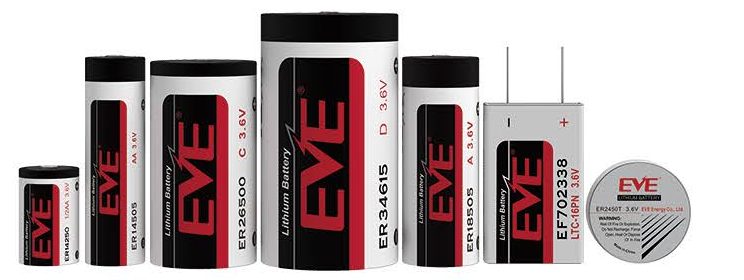
| UN3090 | Lithium metal batteries (including cells) shipped on their own | Primary Li-SOCl₂ and Li-MnO₂ cells such as ER14505 or CR2032 |
| UN3091 | Lithium metal batteries packed with or contained in equipment | Meters, trackers and sensors with primary cells fitted |
| UN3536 | Lithium batteries installed in a cargo transport unit | Containerised energy-storage systems |
LiFePO4 and NCM cells are both lithium-ion. A portable power station is a lithium-ion battery "contained in equipment" (UN3481). ER and CR primary batteries are lithium metal (UN3090/UN3091). The ER+SPC hybrids combine a lithium metal cell with a small lithium-ion capacitor, so ask for the supplier's classification for those.
Step 2: calculate the watt-hour rating
For lithium-ion, the rules scale with the watt-hour (Wh) rating: nominal voltage × rated capacity. Cells up to 20 Wh and batteries up to 100 Wh can qualify for relaxed "small battery" provisions in some modes; anything larger is fully regulated Class 9. For lithium metal, the equivalent limits are 1 g of lithium per cell and 2 g per battery.
| Product | Calculation | Wh rating | Result |
|---|---|---|---|
| 21700 40P cell | 3.6 V × 4.0 Ah | 14.4 Wh | Small cell (≤ 20 Wh) |
| 18V tool pack, 5 × 21700 40P | 18 V × 4.0 Ah | 72 Wh | Small battery (≤ 100 Wh) |
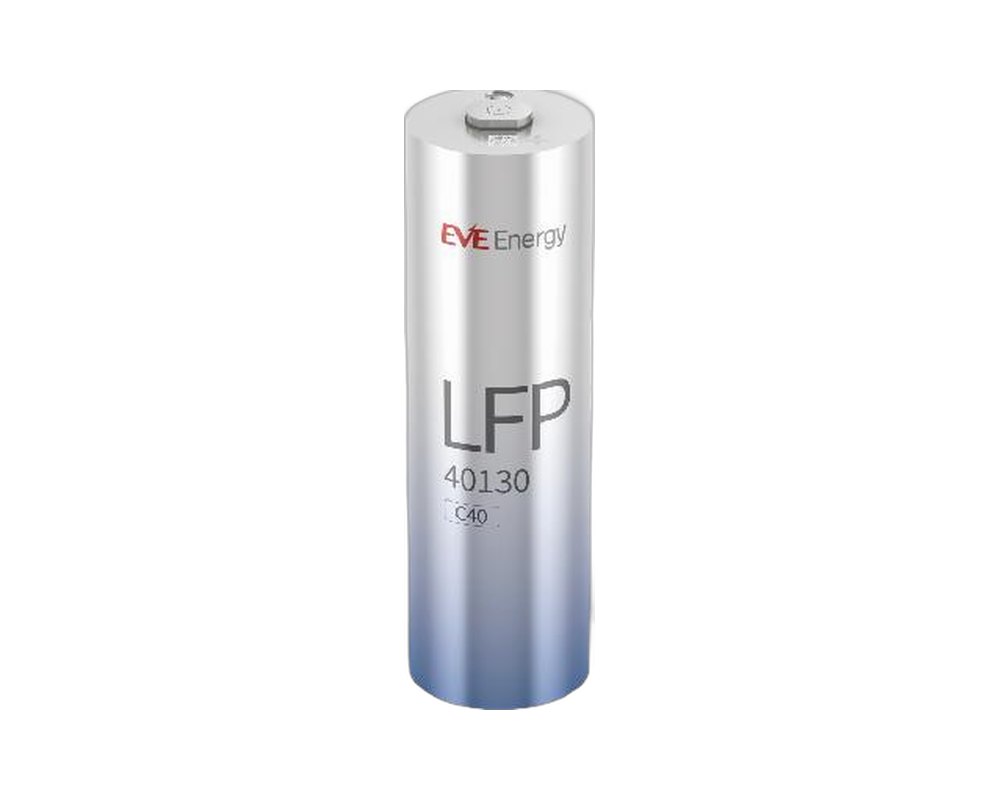
| C40 LFP cell | 3.2 V × 20 Ah | 64 Wh | Fully regulated (cell above 20 Wh) |
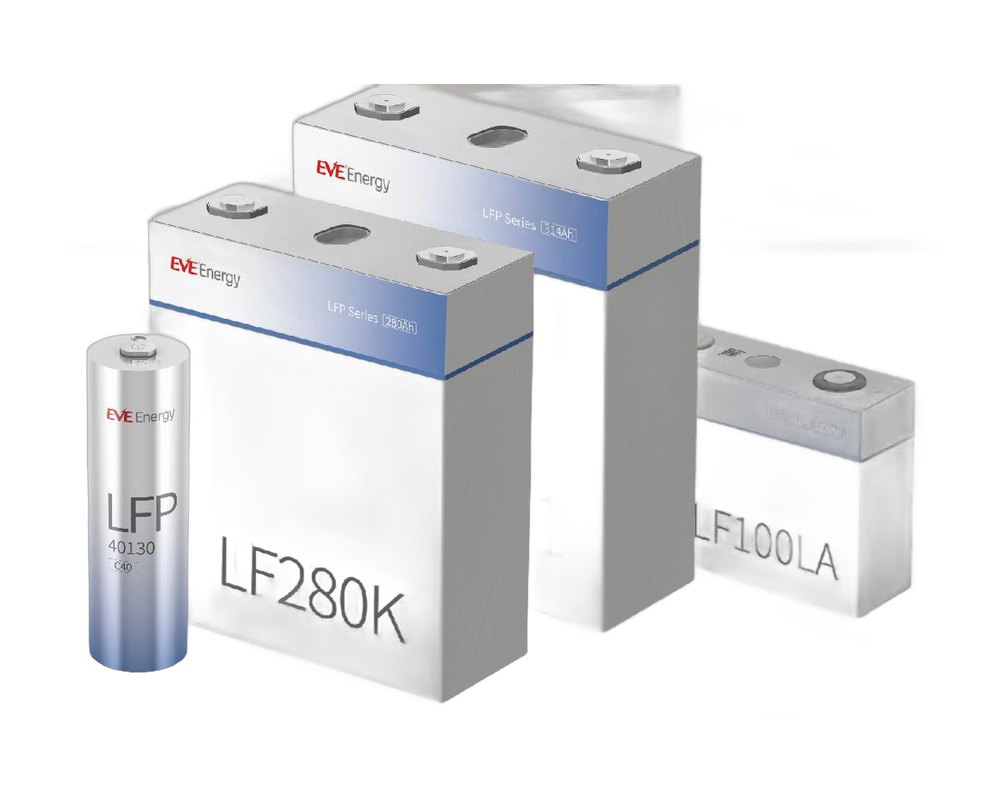
| MB31 LFP cell | 3.2 V × 314 Ah | 1,004.8 Wh | Fully regulated |
| EVE-LVW-5.0 home battery | 51.2 V × 100 Ah | 5,120 Wh | Fully regulated |
| MY24 power station | 2,048 Wh battery in equipment | 2,048 Wh | Fully regulated (UN3481) |
Most B2B shipments of storage cells, modules and home batteries are therefore fully regulated Class 9 cargo. Plan for DG packaging, labelling and declarations from the start rather than as an afterthought.
Step 3: UN38.3, the test every battery type must pass
Before any lithium cell or battery type can be transported, it must pass the tests in section 38.3 of the UN Manual of Tests and Criteria. The tests are done on the cell and battery design, not on each shipment:
| Test | What it simulates |
|---|---|
| T1 Altitude simulation | Low pressure in an unpressurised cargo hold |
| T2 Thermal test | Rapid, extreme temperature changes |
| T3 Vibration | Vibration during transport |
| T4 Shock | Impacts during handling |
| T5 External short circuit | A short across the terminals |
| T6 Impact / crush | Mechanical damage to cells |
| T7 Overcharge | Charger fault on rechargeable batteries |
| T8 Forced discharge | Cell reversal in a multi-cell battery |
The manufacturer must also make a UN38.3 test summary available through the supply chain. It identifies the cell or battery, the test laboratory, the tests passed and the quality system. When you buy, ask for both the full UN38.3 report and the test summary for the exact model, and check that the model name, capacity and Wh rating match the product you receive. A battery assembled from tested cells is a new battery design and needs its own UN38.3 test.
Step 4: air or sea?
Air freight
- UN3480 (lithium-ion batteries on their own) is forbidden on passenger aircraft and goes on cargo aircraft only, at a state of charge of no more than 30% of rated capacity.
- UN3481 (packed with equipment): from 1 January 2026, the 2026 IATA DGR makes the 30% state-of-charge limit mandatory for batteries above 2.7 Wh.
- Damaged, defective or recalled batteries are forbidden by air.
- Air suits samples and small, urgent lots of cells. Large cells, modules and home batteries are expensive and often impractical to fly.
Sea freight
- Sea shipments follow the IMDG Code. The shipping line must accept the DG booking, and some carriers, ports and routes add their own restrictions or surcharges.
- Cargo needs UN-specification packaging where required, Class 9 lithium battery labels, the UN number and proper shipping name on each package, and a dangerous goods declaration.
- Sea is the normal route for container loads of storage cells, modules, home batteries and power stations. Allow extra time for DG booking approval.
Express couriers
Express networks accept lithium batteries only on approved accounts and only within their own rules, which are often stricter than IATA. For samples we confirm the route with the courier before dispatch.
The importer's document checklist
- UN38.3 test report and test summary for each cell and battery model.
- Safety Data Sheet (SDS/MSDS) for the product.
- Transport classification stating UN number, proper shipping name, Class 9, Wh rating or lithium content and the packing instruction used.
- Dangerous goods declaration: the Shipper's Declaration for air, or the multimodal DG declaration for sea.
- Packaging details: UN packaging certificate where required, labels and marks.
- State-of-charge statement for air shipments.
- Product certificates for your market, such as IEC 62619, IEC 62133-2, UL 1973, UL 9540A or CE documentation, depending on the product and destination.
In the European Union, the Battery Regulation (EU) 2023/1542 also places obligations on whoever first places batteries on the market, including registration, labelling and take-back. Check these with your compliance adviser before the first shipment arrives.
How to reduce cost and risk
- Consolidate. DG fees are charged per shipment. Fewer, larger sea shipments cost less per cell than many small air shipments.
- Use regional stock. EVE holds the MB31, LF105, LF100LA, LF230, LF304 and 21700 40P, 50E and 50PL in its EU warehouse, which avoids international DG shipping for small lots in Europe. See global delivery.
- Ship cells, build locally. For pack assemblers, importing cells by sea and assembling locally avoids flying finished batteries.
- Check documents before booking. Most delays come from documents that do not match the goods: model names, capacities or Wh ratings that differ between invoice, UN38.3 summary and labels.
Bottom line
Identify the UN number, calculate the Wh rating, make sure the exact model has a UN38.3 report and test summary, and choose the transport mode before you place the order. For storage cells and home batteries that usually means sea freight as fully regulated Class 9 cargo. Tell us the model, quantity and destination and we will confirm the route, documents and lead time with your quotation.
Frequently asked questions
Is a LiFePO4 battery still dangerous goods?
Yes. LiFePO4 is more thermally stable than NCM, but it is still a lithium-ion battery and is classified as Class 9 under UN3480 or UN3481.
What is the difference between UN3480 and UN3481?
UN3480 covers lithium-ion cells and batteries shipped on their own. UN3481 covers lithium-ion batteries packed with equipment or contained in equipment, such as a portable power station.
Can I ship 314Ah cells by air?
Only on cargo aircraft, as fully regulated Class 9 at no more than 30% state of charge, and only if the carrier accepts them. Because of cost and restrictions, large cells normally ship by sea.
What is a UN38.3 test summary?
A short document from the manufacturer that identifies the cell or battery, the tests passed, the test laboratory and the quality system. It must be available to anyone in the supply chain who asks for it.
Does a battery made from UN38.3-tested cells need its own test?
Yes. UN38.3 applies to each cell and battery design. A new pack design built from tested cells must itself be tested, with limited exceptions for some assemblies of already-tested batteries.
More buyer guides
- How to read a lithium cell datasheet: capacity, C-rate, cycle life and the specs that matter
- 48V low-voltage vs high-voltage home batteries: how to choose and size a solar battery
- 314Ah vs 280Ah LFP cells: which to choose for energy storage
- 18650 vs 21700 cells for cordless power tools
- Li-SOCl₂ vs Li-MnO₂: choosing a primary battery for meters and IoT