Updated 2026-11-03 · By the WattSourcing sourcing team · Figures from EVE Energy published specifications
- Peak shaving is sized from the load profile: power = peak demand minus target, energy = the area of the load curve above the target.
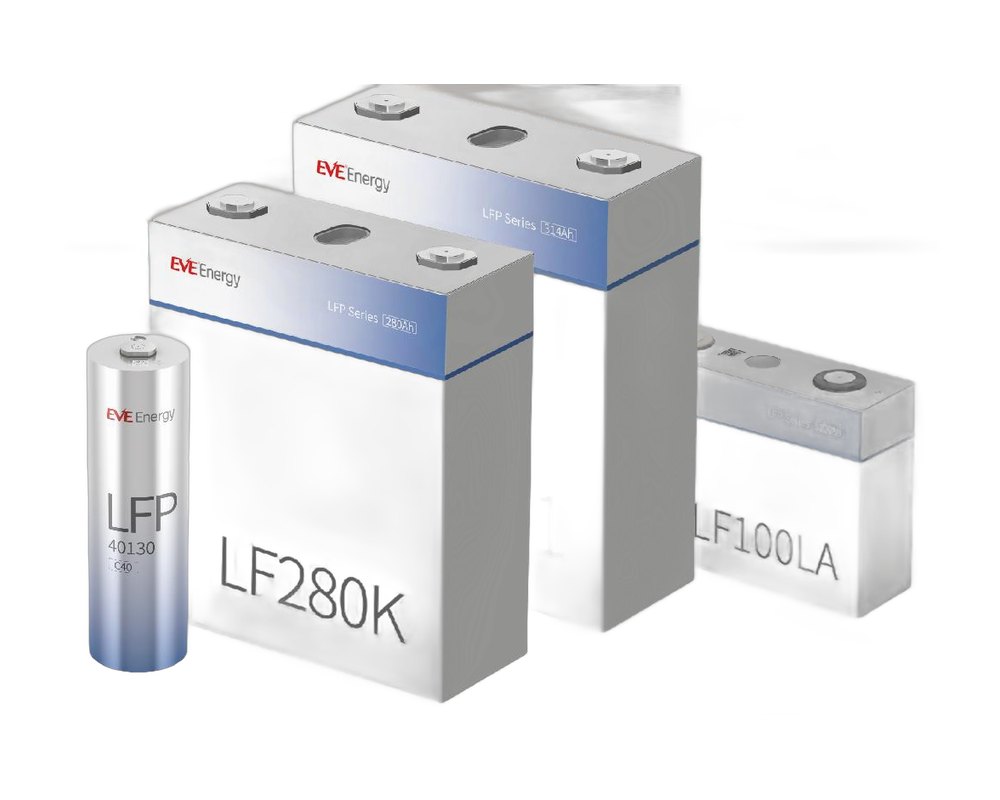
- The duration (energy ÷ power) decides the cell: about 1 hour needs 1P-capable cells such as the EVE LF280K; 2 hours suits 0.5P cells such as the MB31; 4 hours matches 0.25P systems such as Mr.Giant.
- Divide the usable energy by depth of discharge and allow for round-trip losses to get nominal energy.
- At one cycle per working day, an 8,000-cycle cell outlasts its calendar life, so warranty terms and capacity fade matter more than the cycle count.
- Payback comes from demand-charge savings first, with energy arbitrage and solar self-consumption on top; model them with your own tariff.
For factories, cold stores, logistics centres and commercial buildings, a large part of the electricity bill is often the demand charge: a fee based on the highest power drawn in a billing period, usually measured over 15 or 30 minutes. A battery that supplies those short peaks can cut the charge every month. This guide shows how to size a commercial and industrial (C&I) battery for peak shaving, which cell and system format fits, and how to estimate the payback, with EVE Energy's cabinets and cells as examples.
Step 1: get the load profile
Start from interval data, not from the monthly bill. Ask the utility or the site's energy meter for at least 12 months of 15-minute data. You need to see:
- the highest demand each month and when it happens;
- how long each peak lasts, and how many peaks occur per day;
- whether peaks follow a pattern (shift start, compressors, production batches) or are random;
- seasonal differences, for example cooling loads in summer.
Also collect the tariff: demand charge per kW per month, time-of-use energy prices and any rules on how the peak is measured.
Step 2: set the peak target
The target is the maximum demand you want the grid to see. Lowering it saves more but needs a larger battery. A practical approach is to plot the monthly peaks and the load-duration curve, then test several targets: often the first 10–20% of peak reduction is cheap, because the highest peaks are short, and savings per kWh of battery fall after that.
Step 3: calculate power and energy
- Power (kW) = peak demand − target. If the site peaks at 600 kW and the target is 450 kW, the battery must deliver 150 kW.
- Energy (kWh) = the area of the load curve above the target on the worst day. If demand stays above 450 kW for about two hours on that day, averaging 150 kW over the line, the battery must supply about 300 kWh.
Then convert usable energy to nominal energy:
- Divide by usable depth of discharge, for example 90%.
- Allow for round-trip losses in the battery and power conversion system; check the efficiency figure of the system you buy.
- Add a margin for capacity fade over the project life, or plan to augment later.
In the example, 300 kWh ÷ 0.9 ≈ 333 kWh, and with conversion losses and a fade margin a nominal size of about 360–400 kWh is a sensible starting point.
Step 4: choose the duration and the cell
Duration is energy divided by power. It decides which cell and system format fits:
| Duration | Typical use | Cell rating needed | EVE examples |
|---|---|---|---|
| About 1 hour | Short, sharp peaks; frequency response | 1P / 1C | LF280K (1P maximum) |
| About 2 hours | Peak shaving, time-of-use shifting | 0.5P | MB31 314Ah, MB30 306Ah |
| About 4 hours | Solar shifting, grid services, utility projects | 0.25P | Mr.Giant 5MWh (628Ah cells, 0.25P) |
Our example (150 kW for about 2 hours) is a 2-hour system, so 0.5P storage cells such as the MB31 are the efficient choice. The 314Ah vs 280Ah guide explains why the MB31 is limited to 0.5P while the LF280K allows 1P.
Step 5: choose the system format
| System | Energy | Notes |
|---|---|---|
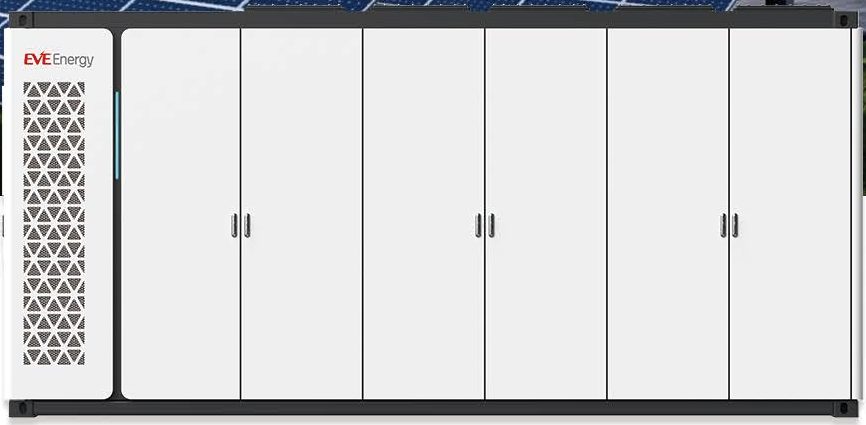
| T231H201 C&I cabinet | 261 kWh | Integrated LFP cabinet, DC voltage range 728–936 V; combine cabinets for larger sites |
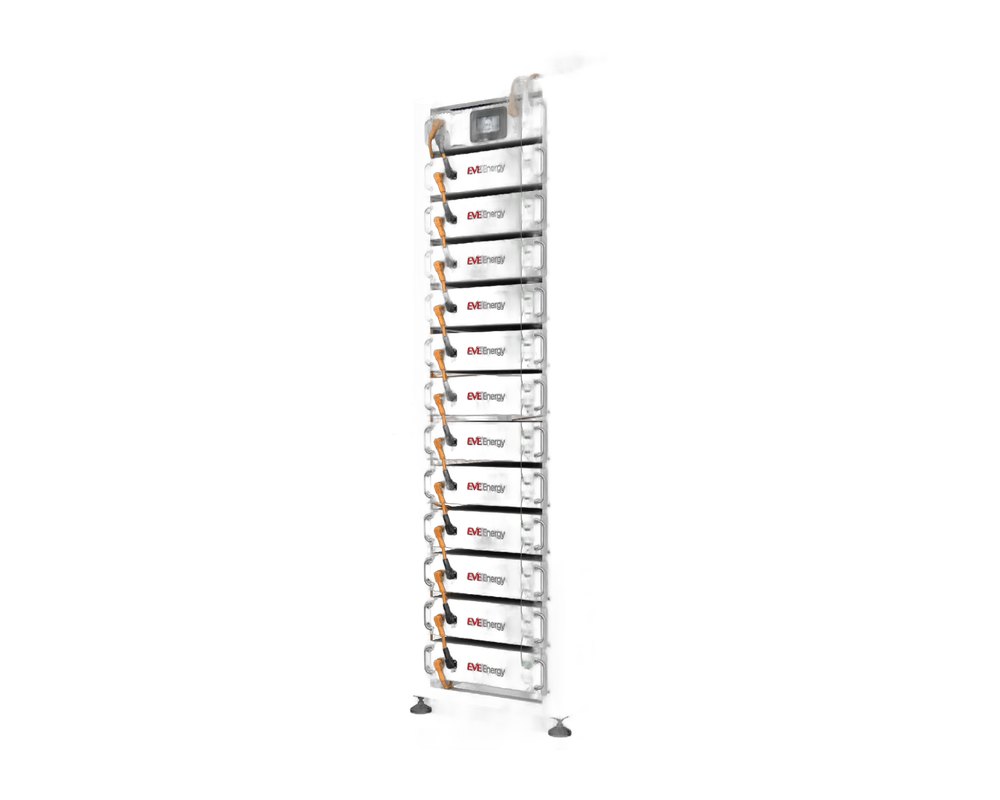
| 60 kWh outdoor cabinet | 61.44 kWh, up to 4 in parallel | IP55, 0.5C rated / 1C maximum; suits small businesses and farms up to about 245 kWh |
| EVE-HVI-60.0 | 61.44 kWh | High-voltage subrack in a standard cabinet, for indoor plant rooms |
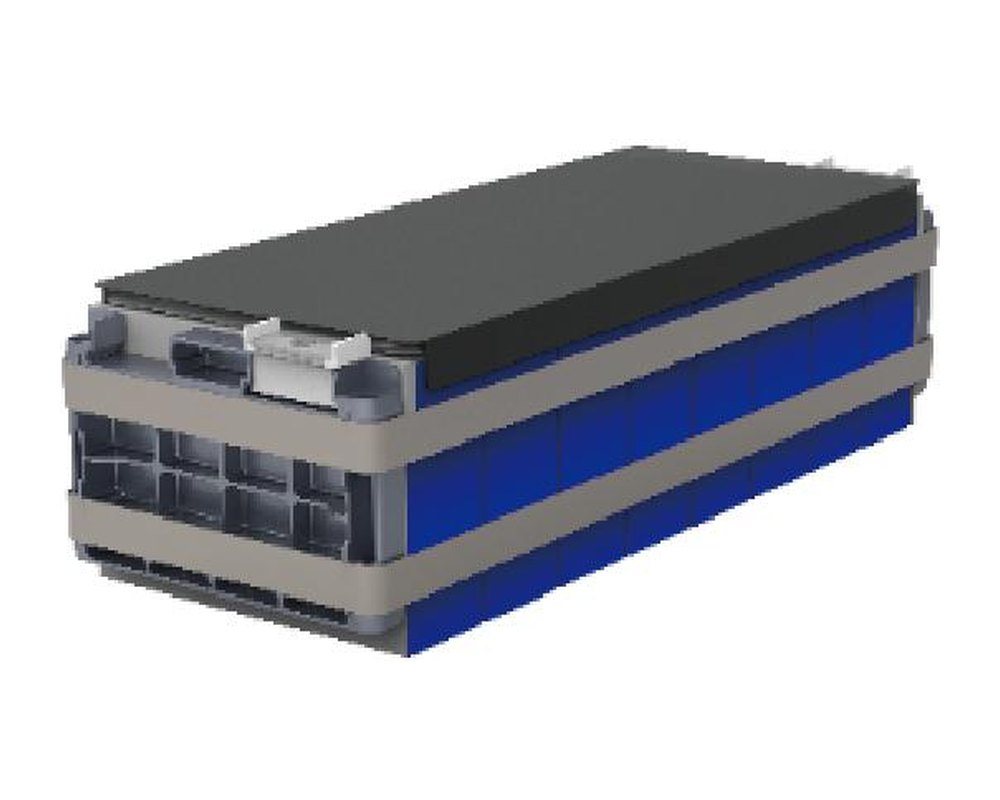
| Custom build with MB31-1P8S modules | 8.03 kWh per module | For integrators who design their own racks, BMS and PCS |
For the example, two T231H201 cabinets give 522 kWh nominal, comfortably above the 360–400 kWh requirement and leaving headroom for growth. Confirm each cabinet's rated power and the PCS rating against the 150 kW requirement with the datasheet supplied with your quotation.
Step 6: check cycle life and warranty
A peak-shaving battery typically cycles about once per working day, or roughly 250–300 cycles a year. At that rate an 8,000-cycle cell such as the MB31 has more cycles than the project needs, so the limits are:
- Calendar life and the system's design life;
- capacity fade: EVE's 8,000-cycle rating is to 70% end-of-life, so plan the sizing margin or augmentation accordingly;
- warranty terms: years, throughput, end-of-life capacity and operating conditions such as temperature.
Step 7: estimate the payback
Build the business case with your own tariff. An illustrative calculation for the example, using assumed prices:
- Demand-charge saving: 150 kW × 15 per kW per month × 12 months = 27,000 per year.
- Energy arbitrage: if the battery also shifts 300 kWh from cheap to expensive hours on 300 days with a price spread of 0.10 per kWh, that adds up to about 9,000 per year before losses.
- Solar self-consumption: on sites with rooftop PV, storing midday surplus can add further savings.
Divide the installed cost (battery, PCS, transformer or switchgear, installation, permitting) by the annual savings minus maintenance to get a simple payback, then test it against tariff changes. Peaks that the battery misses on one day can still set the monthly demand charge, so the control strategy and forecasting matter as much as the hardware.
Safety, standards and permitting
- Cells and batteries: UN38.3 for transport, IEC 62619 for industrial lithium batteries, UL 1973 where required.
- Systems: UL 9540 with UL 9540A fire testing in North America, IEC 62933 series for electrical energy storage systems, and local fire codes such as NFPA 855 in the US.
- Grid connection: local grid codes, protection settings and utility approval for export or non-export operation.
Involve the local fire authority and the utility early: spacing, fire detection and suppression, and grid approval often decide the layout and the timeline.
Bottom line
Size peak-shaving storage from 15-minute interval data: power is the peak minus the target, energy is the area above the target, and the ratio sets the cell. Two-hour systems suit 0.5P storage cells such as the MB31; one-hour systems need 1P cells; four-hour systems use 0.25P designs. Send us your load data, tariff and site location and we will propose a configuration with EVE cabinets or cells, datasheets and lead times.
Related guides: cycle life, calendar life and warranty terms for LiFePO4.
Frequently asked questions
What is peak shaving?
Using a battery to supply power during the site's highest-demand periods so that the grid sees a lower peak. It reduces demand charges, which are based on the highest power drawn in a billing period.
How do I know how big the battery should be?
Use 15-minute interval data. Power is the peak minus your target; energy is the area of the load curve above the target on the worst day. Then divide by depth of discharge and allow for losses and capacity fade.
Should I choose 1-hour or 2-hour storage?
Short, sharp peaks favour 1-hour systems with 1P cells such as the LF280K. Longer peaks and time-of-use shifting favour 2-hour systems with 0.5P cells such as the MB31, which give more energy per cabinet.
How many cycles will a peak-shaving battery do?
Typically about one per working day, roughly 250–300 per year. An 8,000-cycle LFP cell therefore outlasts its calendar life; warranty terms and capacity fade are the real limits.
Can the same battery also store solar energy?
Yes. A C&I battery can combine peak shaving with solar self-consumption and time-of-use shifting, as long as the control system prioritises the monthly peak.
More buyer guides
- How to build a 48V LiFePO4 battery pack (16S) with 280Ah or 314Ah cells
- LiFePO4 charging voltage guide: 12V, 24V and 48V settings, float, low-temperature charging and storage
- How long do LiFePO4 batteries last? Cycle life, calendar life and how to compare ratings
- Grade A LiFePO4 cells: how to verify genuine EVE cells and avoid B-grade or refurbished stock
- How to launch a private-label portable power station: models, certifications and the OEM process
- LiFePO4 vs NCM: which lithium battery chemistry is right for your product?
- Replacing lead-acid with LiFePO4 in golf carts, forklifts and boats: sizing, charging and cell choice
- How to ship lithium batteries: UN38.3, Class 9 and the documents importers need
- How to read a lithium cell datasheet: capacity, C-rate, cycle life and the specs that matter
- 48V low-voltage vs high-voltage home batteries: how to choose and size a solar battery
- 314Ah vs 280Ah LFP cells: which to choose for energy storage
- 18650 vs 21700 cells for cordless power tools
- Li-SOCl₂ vs Li-MnO₂: choosing a primary battery for meters and IoT