Updated 2026-11-10 · By the WattSourcing sourcing team · Figures from EVE Energy published specifications
- A cycle-life rating is the number of full cycles until capacity falls to an end-of-life (EOL) level, under stated test conditions. Ratings to 70% and to 80% EOL are not directly comparable.
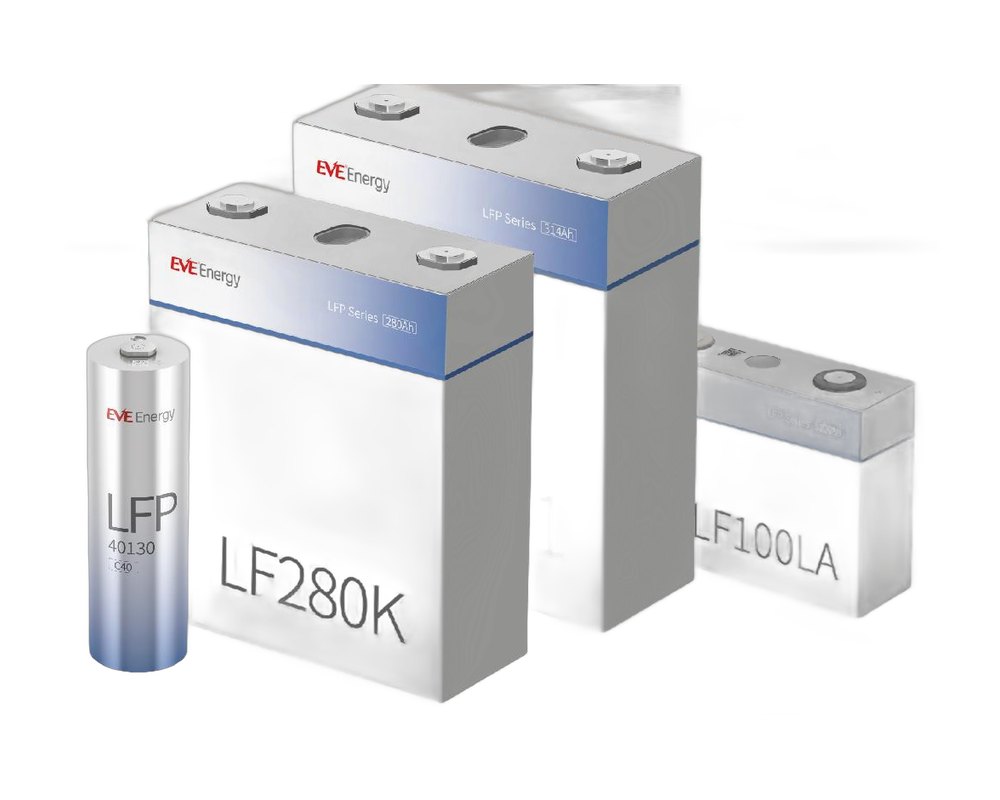
- EVE storage cells range from ≥ 5,000 cycles to 80% (LF100LA) to ≥ 8,000 cycles to 70% (LF280K, MB31) and 10,000 cycles (MB30) under their test conditions.
- At one cycle a day, 8,000 cycles is more than 20 years. In practice, calendar ageing, temperature and the system design limit the life, and most warranties run for about 10 years.
- Heat is the biggest enemy. Keeping cells cool, avoiding long periods at full charge and charging within the rated current extend life the most.
- Compare batteries on energy throughput and warranty terms, not on the cycle number alone.
"How long will it last?" is the first question every buyer of a LiFePO4 battery asks, and the answer usually given, a single cycle number, is the least useful part of it. This guide explains what LiFePO4 cycle-life ratings really mean, how to convert cycles into years, which conditions shorten battery life and how to compare cells and warranties, using EVE Energy's published figures as examples.
What a cycle-life rating means
A cycle-life figure on a datasheet has three parts, and all three matter:
- The number of cycles, usually full charge and discharge cycles at 100% depth of discharge.
- The end-of-life (EOL) level: the remaining capacity at which the test stops, typically 80% or 70% of the initial capacity.
- The test conditions: temperature (usually 25 °C), charge and discharge rate (for example 0.5C/0.5C or 0.5P/0.5P) and sometimes fixture pressure.
A battery at EOL still works. It simply holds less energy than when it was new. Our guide on reading a lithium cell datasheet covers the other datasheet values.
EVE LiFePO4 cycle-life ratings compared
| Cell | Capacity | Rated cycles | Conditions / EOL | Typical use |
|---|---|---|---|---|
| MB30 | 306 Ah | 10,000 | 0.5P/0.5P, 25 °C | Long-life energy storage |
| MB31 | 314 Ah | ≥ 8,000 | 0.5P/0.5P, 25 °C, to 70% | Energy storage |
| LF280K | 280 Ah | ≥ 8,000 | 0.5P/0.5P, 25 °C, to 70% | Energy storage |
| LF560K | 560 Ah | 8,000 | 0.5P/0.5P, 25 °C | Large energy storage |
| LF100LA | 102 Ah | ≥ 5,000 | 25 °C, to 80% | Residential storage, telecom |
| LF105 | 105 Ah | 4,000 | 0.5C/0.5C, 25 °C | Storage and motive power |
Ratings are under EVE's test conditions; check the current datasheet for the exact EOL definition of each model. For comparison, NCM cells used in power tools and consumer products are typically rated for far fewer cycles: see LiFePO4 vs NCM.
Why 70% and 80% end-of-life are not the same
Capacity fade is not linear over the whole life. A cell rated for 8,000 cycles to 70% will reach 80% earlier than 8,000 cycles. When you compare offers, convert them to the same EOL level, or ask the supplier for the full cycle-life curve. Be wary of cycle numbers with no EOL, temperature or rate stated: they cannot be compared with anything.
From cycles to years
How many years a battery lasts depends on how often it cycles:
| Application | Typical cycling | 8,000 cycles equals |
|---|---|---|
| Home solar storage | About 1 cycle a day | About 22 years |
| C&I peak shaving | About 250–300 cycles a year | About 27–32 years |
| Telecom or UPS backup | Few cycles, mostly standby | Calendar life dominates |
| Two cycles a day (arbitrage) | About 700 cycles a year | About 11 years |
Most stationary applications therefore reach the cell's calendar life before its cycle life. Cells age even when they are not used, faster when they are hot or kept at high state of charge. Many stationary systems are designed for a service life of roughly 10 to 20 years, and product warranties typically cover about 10 years with a minimum remaining capacity. For example, the RES-PLW-16.0 home battery is rated for 7,000 cycles.
What shortens LiFePO4 battery life
- High temperature. The most important factor. Cells kept well above 25 °C age faster, both when cycling and in storage. Ventilate enclosures and avoid direct sun.
- Charging in the cold. Charging below 0 °C causes lithium plating and permanent loss. See the charging and temperature guide.
- Long periods at full charge, especially in heat. Storage at partial charge is gentler.
- High charge and discharge rates above the standard rate, which raise temperature and stress.
- Poor matching and balancing. One weak cell in a series string is cycled harder than the rest and limits the pack.
- Mechanical design. Large prismatic cells are rated in a fixed module structure; loose cells can age faster.
- Used or B-grade cells, which start with part of their life already gone. See how to verify genuine cells.
How to make a LiFePO4 battery last longer
- Choose a cell whose standard rate covers your application, for example 0.5P storage cells for 2-hour systems.
- Keep the battery cool: indoor installation, shade, ventilation, or thermal management in cabinets.
- Use a slightly reduced charge voltage for daily cycling, with an occasional full charge for balancing.
- Use a BMS with low-temperature charge protection and good balancing.
- Build packs from matched cells from one lot, held in a proper fixture.
- Store unused batteries at partial charge and check them every few months.
Compare on throughput and warranty, not cycles alone
A more useful number for a business case is lifetime energy throughput: roughly nominal energy × rated cycles × average depth of discharge × average remaining capacity. For one MB31 cell (about 1.0 kWh), 8,000 cycles at full depth with an average of about 85% of initial capacity gives roughly 6.8 MWh over its rated life. A 16S MB31 pack of about 16 kWh gives roughly 109 MWh. Divide the battery cost by the throughput to compare the cost per kWh delivered.
When you compare warranties, check:
- the warranty period and the guaranteed end-of-life capacity;
- whether there is an energy-throughput cap (MWh) as well as years;
- the required operating conditions: temperature, rate and installation.
For commercial projects, see the C&I peak-shaving sizing guide for how cycle life feeds into sizing and payback.
Bottom line
A LiFePO4 cycle rating is only meaningful with its EOL level and test conditions. EVE's storage cells offer 5,000 to 10,000 cycles, more than most stationary applications will use, so calendar life, temperature and system design set the real lifespan. Keep cells cool, charge within limits, use matched genuine cells and compare offers on throughput and warranty. Request datasheets and cycle-life curves for the cells you are considering.
Frequently asked questions
How many years does a LiFePO4 battery last?
In stationary use, typically 10 to 20 years, depending on temperature, cycling and system design. At one cycle a day, an 8,000-cycle cell has enough cycles for more than 20 years, so calendar ageing is usually the limit.
What does 8,000 cycles to 70% mean?
After about 8,000 full cycles under the stated test conditions, the cell still holds about 70% of its initial capacity. The battery keeps working; it simply stores less energy.
Is 6,000 cycles to 80% better than 8,000 cycles to 70%?
They cannot be compared directly. A cell rated to 70% reaches 80% earlier. Ask for both figures at the same end-of-life level, or for the full cycle-life curve.
What reduces LiFePO4 lifespan the most?
High temperature, charging below 0 °C, long periods at full charge, rates above the standard rating and poorly matched cells.
Do LiFePO4 batteries degrade when not in use?
Yes, slowly. This is calendar ageing. It is faster at high temperature and high state of charge, so store batteries cool and partly charged.
More buyer guides
- How to build a 48V LiFePO4 battery pack (16S) with 280Ah or 314Ah cells
- LiFePO4 charging voltage guide: 12V, 24V and 48V settings, float, low-temperature charging and storage
- How to size a commercial battery storage system for peak shaving: a step-by-step guide
- Grade A LiFePO4 cells: how to verify genuine EVE cells and avoid B-grade or refurbished stock
- How to launch a private-label portable power station: models, certifications and the OEM process
- LiFePO4 vs NCM: which lithium battery chemistry is right for your product?
- Replacing lead-acid with LiFePO4 in golf carts, forklifts and boats: sizing, charging and cell choice
- How to ship lithium batteries: UN38.3, Class 9 and the documents importers need
- How to read a lithium cell datasheet: capacity, C-rate, cycle life and the specs that matter
- 48V low-voltage vs high-voltage home batteries: how to choose and size a solar battery
- 314Ah vs 280Ah LFP cells: which to choose for energy storage
- 18650 vs 21700 cells for cordless power tools
- Li-SOCl₂ vs Li-MnO₂: choosing a primary battery for meters and IoT