Updated 2026-11-03 · By the WattSourcing sourcing team · Figures from EVE Energy published specifications
- "Grade A" is a market label, not a manufacturer standard. What matters is a new, full-specification cell from the factory's normal channel, with traceable documents and test data.
- B-grade, surplus, used and refurbished cells are sold every day as "Grade A". Re-milled terminals, re-wrapped casings, inconsistent QR codes and prices far below the market are the classic warning signs.
- Measure every cell on arrival: open-circuit voltage, AC internal resistance against the datasheet (for example 0.18 ± 0.05 mΩ on the EVE MB31) and a capacity test on a sample.
- Matching matters as much as grade: cells in one series string should come from one lot with closely grouped capacity and resistance.
- Buy from a channel that can document the chain back to the manufacturer and supply per-cell data with the shipment.
Search any marketplace for 280Ah or 314Ah LiFePO4 cells and almost every listing says "Grade A". Prices for what looks like the same cell can differ by 30% or more. The difference is usually not the seller's margin: it is the cell. This guide explains what grading really means, how B-grade and refurbished cells reach the market, and how to inspect cells on arrival, using EVE's published datasheet values as the reference.
What "Grade A" means, and what it does not
Cell manufacturers do not publish a "Grade A / Grade B" standard. The terms come from the trade. In practice, buyers use them like this:
| Label in the market | What it usually means | Risk |
|---|---|---|
| Grade A (genuine) | New cells from the manufacturer's normal production, meeting the datasheet, sold through a traceable channel | Low |
| Grade B | Cells outside the factory's shipping limits for capacity, resistance or appearance, or from surplus and cancelled orders | Medium to high: wider spread, shorter life, no manufacturer support |
| Used or "pulled" | Cells removed from storage systems or vehicles | High: unknown history and remaining life |
| Refurbished / re-labelled | Used or B-grade cells cleaned, re-milled, re-wrapped and re-coded to look new | Very high, and often sold as "Grade A" |
So the useful question is not "is it Grade A?" but "can the seller show that this is a new cell meeting the manufacturer's datasheet, from a traceable source?"
Why it matters more than the price difference
- Cycle life. EVE rates the MB31 and LF280K at ≥ 8000 cycles to 70% end-of-life under its test conditions. A used cell has already spent part of that life, and nobody can tell you how much.
- Pack balance. A series string is only as good as its weakest cell. One cell with lower capacity or higher resistance limits the whole pack and makes the BMS balance constantly.
- Safety and certification. Certified products (IEC 62619, UL 1973, UL 9540A) are tested with specific genuine cells. Substituted cells can invalidate the certification and the insurance behind it.
- Warranty. Cells outside the authorised channel carry no manufacturer support if something fails.
Warning signs before you buy
- Price well below the market for the same model and quantity.
- No model-specific documents: the seller cannot provide the current datasheet, UN38.3 test summary and SDS for the exact model.
- No production information: the seller will not share production date or lot, or refuses to send a photo of the actual cells' QR codes and terminals.
- "Grade A" with a capacity above the datasheet, for example 320Ah sold as a 314Ah cell. Genuine cells are sold by their rated capacity.
- Mixed models or dates in one order, or reluctance to ship from a single lot.
Physical inspection on arrival
| Check | What good looks like | Red flag |
|---|---|---|
| Terminals | Clean, flat factory surface | Milling or grinding marks, weld spots, uneven height: signs of removed busbars |
| Casing and film | Even factory film, no air bubbles, correct printing | New or loose film over an older case, bubbles, misaligned labels |
| QR code | Crisp laser marking, readable, consistent format across the batch | Faint, re-etched or sticker codes; duplicate codes; codes that do not match the model |
| Shape | Flat sides within tolerance | Swelling or bulging, dents on the case |
| Dimensions and weight | Within the datasheet tolerance (MB31: 173.7 × 71.7 × 207.2 mm, 5600 ± 300 g) | Outside tolerance, or wide weight spread within the batch |
Electrical inspection: three measurements
1. Open-circuit voltage
Measure every cell. LFP cells are shipped partly charged, and cells from one genuine lot arrive with closely grouped voltages. A cell far below the rest, or one near the 2.5 V lower limit, needs investigation before use.
2. AC internal resistance
Use a 1 kHz AC resistance meter with four-wire (Kelvin) probes and compare with the datasheet:
- MB31: 0.18 ± 0.05 mΩ
- LF280K: ≤ 0.25 mΩ
- LF100LA: ≤ 0.5 mΩ
Resistance rises as cells age, so values clearly above the datasheet are a strong sign of used or B-grade stock. Record every cell; you will need the data for matching.
3. Capacity test on a sample
Charge to the datasheet limit (3.65 V) and discharge at the standard rate to the cut-off (2.5 V) at room temperature, using a calibrated tester. A genuine new cell should deliver at least its rated capacity under those conditions. Test a sample from every batch; for critical projects, test every cell.
Matching cells for a pack
Even genuine Grade A cells should be grouped before they go into a series string:
- Use cells from one production lot for each pack.
- Sort by capacity and internal resistance, and build each string from the closest group. Many pack builders aim for a capacity spread within about 1–2% and a resistance spread of a few hundredths of a milliohm on large prismatic cells; set your own limits from your test data.
- Top-balance the cells (charge all to the same voltage) before final assembly.
- Keep the measurement records with the pack serial number for warranty and service.
Documents to ask for with every order
- Current manufacturer datasheet for the exact model.
- UN38.3 test summary and SDS.
- Per-cell test data from the shipment: voltage and internal resistance, and capacity grading where available.
- Production date or lot information for the cells shipped.
- Commercial documents that show the chain of supply.
How WattSourcing supplies EVE cells
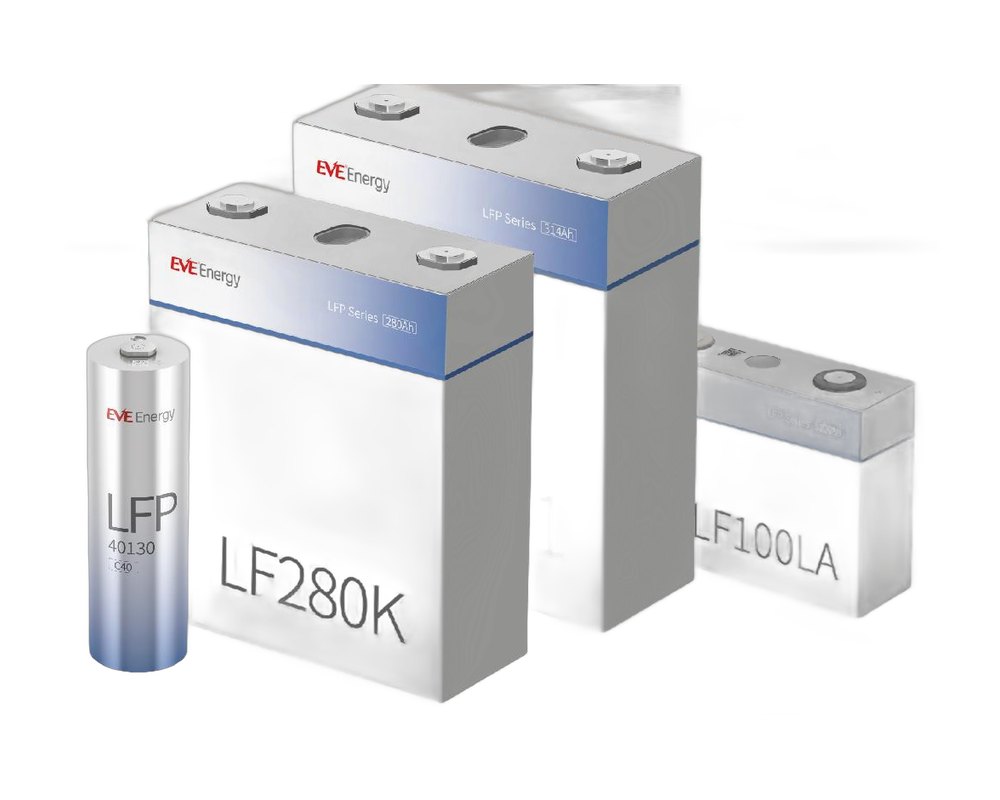
We supply new EVE Energy cells with the manufacturer's labels and documentation, from one lot per order where possible, and we can provide per-cell voltage and internal-resistance data with each shipment. Selected models, including the MB31, LF105, LF100LA, LF230 and LF304, are also available from EVE's EU warehouse. See global delivery.
Bottom line
Treat "Grade A" as a claim to verify, not a specification. Ask for model-specific documents before you pay, inspect terminals, casings and QR codes on arrival, measure voltage and internal resistance on every cell, test capacity on a sample and match cells by lot. Request samples with test data and compare them with any other offer you have.
Related guides: from matched cells to a finished 48V 16S pack and LiFePO4 lifespan and cycle ratings.
Frequently asked questions
Is there an official Grade A standard for LiFePO4 cells?
No. Manufacturers specify their cells with a datasheet. "Grade A" and "Grade B" are trade terms, so ask the seller to show that the cells are new, meet the datasheet and come from a traceable source.
How can I tell if a cell has been refurbished?
Look for milled or ground terminals, weld marks, new or loose film over an older casing, faint or re-etched QR codes and swelling. Internal resistance clearly above the datasheet value is another strong sign.
What internal resistance should a new MB31 cell have?
EVE's datasheet gives 0.18 ± 0.05 mΩ AC internal resistance for the MB31, measured at 1 kHz. Use a four-wire meter for accurate readings.
Do I need to test every cell?
Measure voltage and internal resistance on every cell; it is quick and gives you matching data. Capacity tests take longer, so test a sample of each batch, or every cell for critical projects.
Can WattSourcing provide per-cell test data?
Yes. We can supply per-cell voltage and internal-resistance data with shipments, and capacity grading where available. Mention it in your request.
More buyer guides
- How to build a 48V LiFePO4 battery pack (16S) with 280Ah or 314Ah cells
- LiFePO4 charging voltage guide: 12V, 24V and 48V settings, float, low-temperature charging and storage
- How long do LiFePO4 batteries last? Cycle life, calendar life and how to compare ratings
- How to size a commercial battery storage system for peak shaving: a step-by-step guide
- How to launch a private-label portable power station: models, certifications and the OEM process
- LiFePO4 vs NCM: which lithium battery chemistry is right for your product?
- Replacing lead-acid with LiFePO4 in golf carts, forklifts and boats: sizing, charging and cell choice
- How to ship lithium batteries: UN38.3, Class 9 and the documents importers need
- How to read a lithium cell datasheet: capacity, C-rate, cycle life and the specs that matter
- 48V low-voltage vs high-voltage home batteries: how to choose and size a solar battery
- 314Ah vs 280Ah LFP cells: which to choose for energy storage
- 18650 vs 21700 cells for cordless power tools
- Li-SOCl₂ vs Li-MnO₂: choosing a primary battery for meters and IoT