Updated 2026-10-19 · By the WattSourcing sourcing team · Figures from EVE Energy published specifications
- Four LFP cells in series (12.8 V) replace a 12 V lead-acid battery; 8, 16 and 24 cells replace 24 V, 48 V and 72 V-class systems.
- You can size LFP smaller in Ah: lead-acid is usually limited to about 50% depth of discharge for good life, while LFP is routinely used to 80–90%.
- A 51.2 V, 105 Ah LFP pack built from 16 EVE LF105 cells has about 32 kg of cells, a fraction of the weight of an equivalent lead-acid bank.
- Lead-acid chargers with equalisation or desulphation modes must not be used; LFP needs a CC-CV charger set to 3.65 V per cell or less, and a BMS.
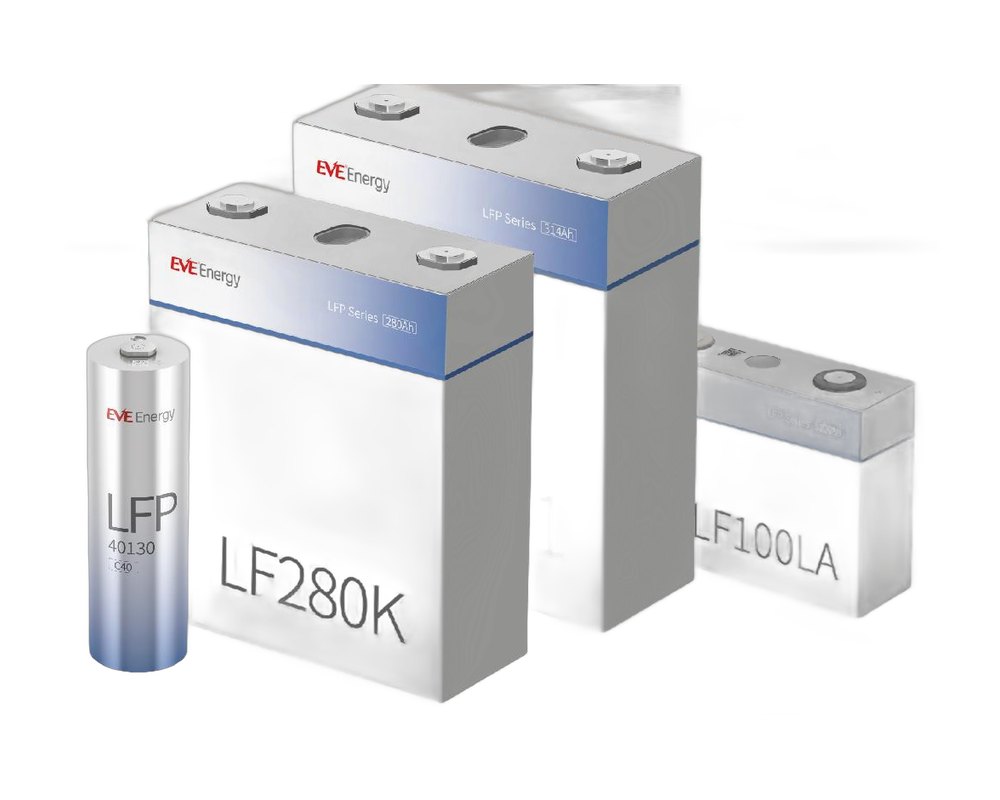
- EVE's motive cells (LF105, LF230, LF304, LF90K, LF50L) and ready-made 12.8 V and 25.6 V modules cover most conversions.
Golf carts, forklifts, AGVs, floor scrubbers, boats and RVs have run on lead-acid batteries for decades. LiFePO4 replacements are now mainstream: they last many times longer, charge faster, need no watering and weigh far less. A good conversion is more than swapping boxes, though. Voltage, capacity, charging, BMS and mechanical fit all need to be right. This guide covers each, with EVE cells and modules as examples.
Why fleets switch to LiFePO4
- Cycle life. EVE's motive LFP cells are rated for 4,000 to 6,000 cycles under their datasheet conditions, against a few hundred to around a thousand for typical deep-cycle lead-acid.
- Usable capacity. Lead-acid is usually limited to about 50% depth of discharge for acceptable life; LFP is routinely used to 80–90%.
- Weight. A 12 V 100 Ah lead-acid battery typically weighs 25–30 kg; four LF105 cells for a 12.8 V 105 Ah battery weigh about 8 kg.
- Opportunity charging. LFP can be charged in short breaks without the damage partial charging causes to lead-acid, so one battery covers multiple shifts.
- No maintenance. No watering, no equalisation, no acid fumes in the charging area.
Step 1: match the voltage
| Lead-acid system | LFP cells in series | LFP nominal voltage | Typical vehicles |
|---|---|---|---|
| 12 V | 4S | 12.8 V | Boats (house battery), RVs, small AGVs |
| 24 V | 8S | 25.6 V | Pallet trucks, floor scrubbers, small forklifts |
| 36 V | 12S | 38.4 V | Older golf carts, utility vehicles |
| 48 V | 16S | 51.2 V | Golf carts, counterbalance forklifts, LSVs |
| 72 V | 24S | 76.8 V | Larger utility vehicles and forklifts |
| 80 V | 25S | 80 V | Large counterbalance forklifts |
LFP runs slightly higher than lead-acid at rest and has a flatter curve, so check that the motor controller's under- and over-voltage limits suit an LFP pack, and that the state-of-charge gauge is replaced or reprogrammed: a lead-acid gauge reads LFP incorrectly.
Step 2: size the capacity
Size on usable energy, not on the old battery's Ah rating:
- Usable energy of the old bank = voltage × Ah × usable depth of discharge. A 48 V, 150 Ah lead-acid bank used to 50% gives about 3.6 kWh.
- LFP pack needed = usable energy ÷ LFP depth of discharge. At 85%, that is about 4.2 kWh.
- Pick cells: sixteen LF105 cells make a 51.2 V, 105 Ah pack of 5.38 kWh, which comfortably covers the requirement with reserve for cold days and ageing.
Then check current: peak motor current during acceleration or lifting, and the charger current. Size the cells and BMS for both.
Step 3: choose the cells or modules
| Cell or module | Capacity | Rated cycles | Weight | Good for |
|---|---|---|---|---|
| LF50L | 50 Ah | 5,000 (0.5C/0.5C) | 1.09 kg | Small vehicles, AGVs, compact packs |
| LF90K | 90 Ah | 6,000 (1C/1C) | 1.99 kg | Higher-rate duty, frequent charging |
| LF105 | 105 Ah | 4,000 (0.5C/0.5C) | 1.98 kg | Golf carts, 12 V and 48 V conversions |
| LF230 | 230 Ah | 4,000 (0.5C/0.5C) | 4.14 kg | Forklifts, larger 24 V and 48 V packs |
| LF304 | 304 Ah | 4,000 (0.5C/0.5C) | 5.45 kg | High-capacity forklift and marine banks |
| BM-12-12.8-180 | 12.8 V, 180 Ah, 2.3 kWh | – | – | Ready-made 12 V building block |
| BM-8-25.6-100L | 25.6 V, 100 Ah, 2.56 kWh | – | – | Ready-made 24 V building block |
LF105, LF230 and LF304 are also held in EVE's EU warehouse, which helps European converters order small lots. EVE marks these cells for motive use; storage-optimised cells such as the MB31 are rated at lower currents and suit stationary systems better.
Step 4: charger and BMS
- Charger. Use a CC-CV charger with an LFP profile: no more than 3.65 V per cell (14.6 V for 12.8 V, 58.4 V for 51.2 V), no float above the pack's rest voltage, and no equalisation or desulphation mode. Many fleets set a slightly lower charge voltage to extend life.
- BMS. Every LFP pack needs a BMS with cell-level over- and under-voltage protection, over-current and short-circuit protection, temperature sensing and cell balancing. For vehicles, choose a BMS that communicates with the charger and controller (CAN where available).
- Cold charging. LFP must not be charged below 0 °C at normal rates. For unheated warehouses, cold-store forklifts or winter boat storage, use a BMS that blocks charging in the cold, or a pack with heating.
Step 5: mechanical and safety details
- Ballast. Counterbalance forklifts rely on battery weight for stability. A lighter LFP pack usually needs added ballast to keep the truck's rated capacity; follow the truck manufacturer's guidance.
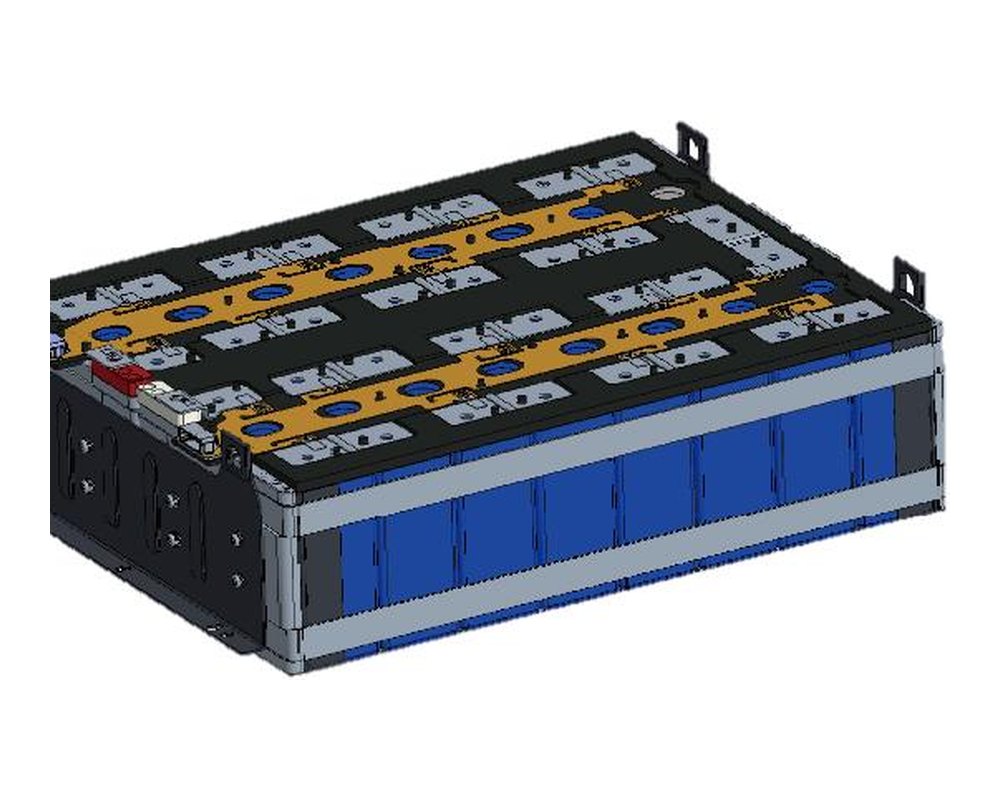
- Vibration. Fix cells with end plates and compression, use flexible busbars where needed, and protect cables. Prismatic aluminium-can cells in a rigid frame handle vehicle vibration well.
- Marine. Keep packs dry and ventilated, protect terminals from salt, fuse close to the battery and follow local marine electrical standards.
- Documentation. Converted batteries need UN38.3 for transport and the safety approvals your market expects for the vehicle or equipment.
Worked example: a 48 V golf cart
A cart with six 8 V, 150 Ah lead-acid batteries (48 V, 7.2 kWh nominal, about 3.6 kWh usable at 50%) can be converted to a 16S LF105 pack: 51.2 V, 105 Ah, 5.38 kWh nominal and about 4.6 kWh usable at 85%. That is more usable range with roughly 32 kg of cells, a large reduction from a typical lead-acid bank. Add a 16S BMS rated for the cart's peak current, an LFP charger profile set to 58.4 V or slightly less, and a new state-of-charge display.
Bottom line
Match voltage by cell count, size on usable energy, pick motive-rated cells for the current your vehicle draws, and never reuse a lead-acid charger profile. Done properly, an LFP conversion pays back through longer life, faster charging and zero maintenance. Send us your vehicle type, voltage, current lead-acid bank and duty cycle and we will propose cells or modules with datasheets.
Related guides: LiFePO4 charging voltage, float and lead-acid charger settings.
Frequently asked questions
Can I use my old lead-acid charger with a LiFePO4 battery?
Only if it has a dedicated LFP profile. Lead-acid chargers often apply equalisation or desulphation voltages that can overcharge LFP cells. Use a charger set to 3.65 V per cell or less with no equalisation.
How many LiFePO4 cells replace a 48 V lead-acid bank?
Sixteen cells in series, giving 51.2 V nominal. For 12 V use four, for 24 V eight, and for 36 V twelve.
Can I use fewer amp-hours with lithium?
Usually yes. Lead-acid is typically limited to about 50% depth of discharge, while LFP can use 80–90%, so a smaller Ah rating can deliver the same usable energy.
Is a lighter battery a problem for forklifts?
Counterbalance forklifts use battery weight as part of their counterweight, so a lighter pack may need added ballast. Follow the truck manufacturer's guidance.
Which EVE cells are in EU stock for conversions?
LF105, LF230 and LF304 are held in EVE's EU warehouse, along with LF100LA and MB31.
More buyer guides
- How to build a 48V LiFePO4 battery pack (16S) with 280Ah or 314Ah cells
- LiFePO4 charging voltage guide: 12V, 24V and 48V settings, float, low-temperature charging and storage
- How long do LiFePO4 batteries last? Cycle life, calendar life and how to compare ratings
- How to size a commercial battery storage system for peak shaving: a step-by-step guide
- Grade A LiFePO4 cells: how to verify genuine EVE cells and avoid B-grade or refurbished stock
- How to launch a private-label portable power station: models, certifications and the OEM process
- LiFePO4 vs NCM: which lithium battery chemistry is right for your product?
- How to ship lithium batteries: UN38.3, Class 9 and the documents importers need
- How to read a lithium cell datasheet: capacity, C-rate, cycle life and the specs that matter
- 48V low-voltage vs high-voltage home batteries: how to choose and size a solar battery
- 314Ah vs 280Ah LFP cells: which to choose for energy storage
- 18650 vs 21700 cells for cordless power tools
- Li-SOCl₂ vs Li-MnO₂: choosing a primary battery for meters and IoT